

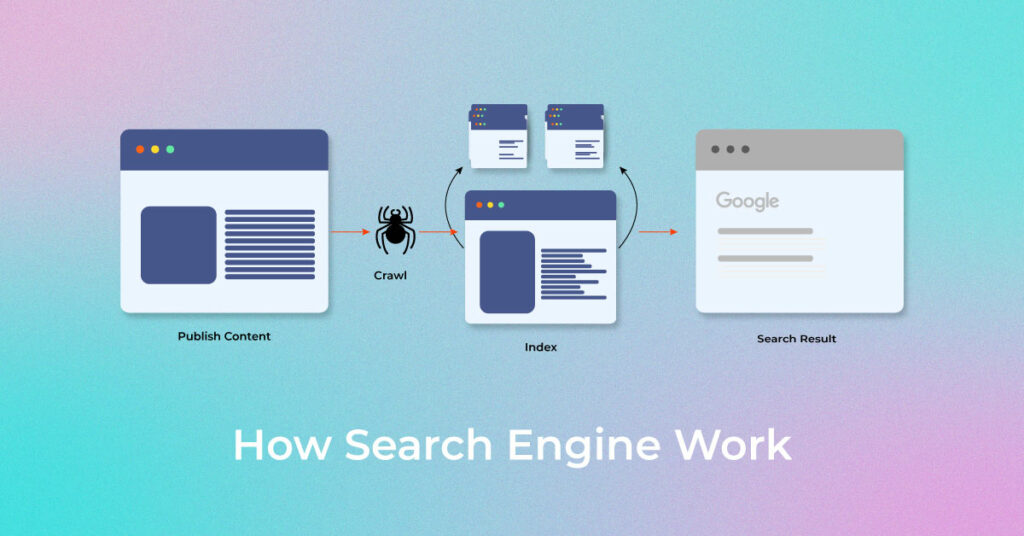
Search engines are powerful systems designed to help users find the most relevant information on the internet. The process begins with crawling. Search engines use bots, also known as spiders, to scan websites by following links from one page to another. These bots collect data such as text content, images, links, and page structure.
After crawling, the information is stored in a massive database called the index. Indexing helps search engines quickly retrieve pages when a user searches for a keyword. If a page is not indexed, it cannot appear in search results, no matter how good the content is.
Ranking is the final and most important stage. When a user enters a query, search engine algorithms analyze thousands of ranking factors to decide which pages deserve top positions. These factors include keyword relevance, content quality, backlinks, page speed, mobile-friendliness, and user experience.
User behavior also plays an important role. Metrics like click-through rate, bounce rate, and time spent on a page help search engines understand whether users find the content useful. Pages that deliver value and satisfy search intent are rewarded with higher rankings.
Search engines continuously update their algorithms to improve result quality and reduce spam. Understanding how search engines work allows website owners to align their SEO strategies with algorithm expectations and achieve long-term visibility.
Your email address will not be published. Required fields are marked *